Elements of a Brand Identity
In the branding process, there is nothing more exciting to a designer than when the designing actually begins. You’ve done your onboards, you’ve covered the consultation and brand creative direction, now it’s time for the fun stuff: creating the brand identity.
But what elements actually make up the brand identity? Or in other words, what deliverables can be expected in a brand identity? The answer to this question might vary from designer to designer or from business to business, but when I am developing a brand identity for a client, there are several of key elements that I like to include:
Primary Logo
Alternate Logos & Variations
Submarks
Icons
Color Palette
Brand Pattern
Typography
Collateral
Style Guide
Of course some of these aren’t ESSENTIALS, such as collateral or a brand pattern, but the beauty of this is, as a designer, you have full control of what you offer! You can be as extensive as you want depending on the client’s budget and needs,
Now lets go over each of these items in a detailed view:
Logo & Variations
Most brands will have multiple logos that they use for different media types or platforms. There is a primary logo that is used most prominently on all customer touch-points. Alternate logos can be used in addition to the primary logo if the primary logo has already been used OR if the primary logo doesn’t quite fit in the media being used. For example, the primary logo might be long and rectangular, but the space given on a certain media is a square. So the solution might be an alternate logo that’s more stacked and compact. A great example of this is a website favicon. A smaller alternate logo is typically used in this situation, rather than the primary logo.
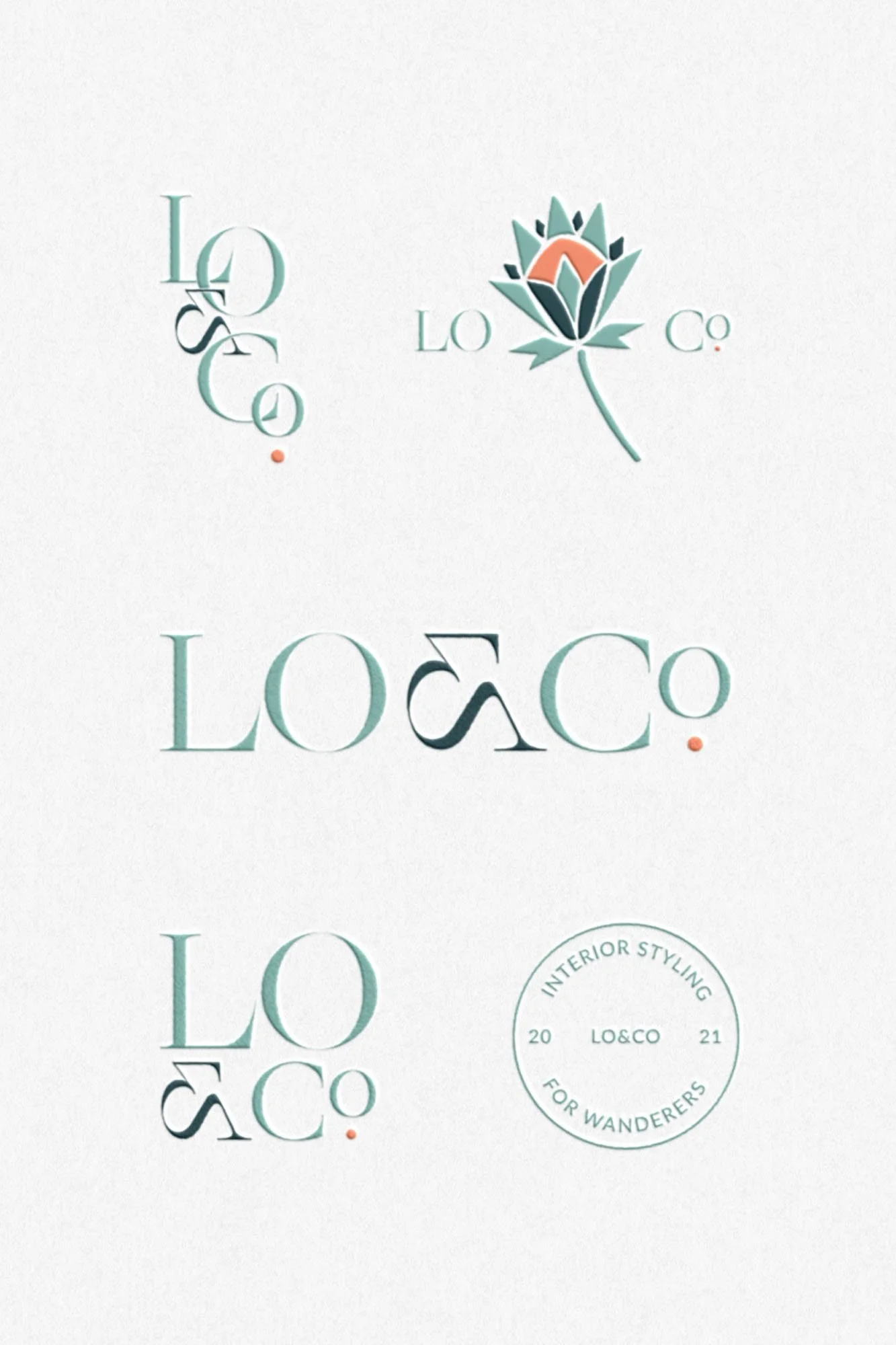
Submarks
Submarks are graphic elements that are inspired by the primary logo and can be used more playfully throughout the brand’s identity. Submarks should never be used as the primary or alternate logo, they are only additions to it. These submarks can be used on packaging, business cards, signage, social media graphics, or any time that there is a need for an additional branded graphic element.
Icons
Brand icons are brand identifiers that can be used on customer touch-points for more brand recognition, significance, and depth. Icons are most commonly used on social media, profile pictures, highlight cover photos, website page icons, or watermarks. Again, these are additions to the primary logo, never a replacement.

Colors
Colors are crucial for creating a brand identity that speaks to your client’s core values and their ideal customer. Depending on the brand, there might only be one or two colors, or there might be up to four or five colors. Colors are a great way to evoke emotions and feelings that speak directly to the brand’s ideal customer.
Brand Pattern
Brand patterns are typically used as backgrounds or added texture to different types of collateral. Not every brand needs a brand pattern. Typically, a brand that is solely online might not need a brand pattern as much as a brand that has tangible products and needs packaging, wrapping/tissue paper or other printed materials.
Typography
Typography is crucial for a brand identity and plays a major role in creating consistency across all customer touch-points. The typography system you send your client should typically include 2-3 fonts. I usually choose fonts that differ from the primary logo, but still compliment the primary logo. For example, if I use Helvetica in a brand’s primary logo, I will choose a different font to be used for website copy or other text. That way, a logo can stand on its own and doesn't compete with the brand typography.
Collateral
Any additional items that are designed beyond the brand identity are considered collateral. This could be business cards, social media templates, sales or pricing decks, or packaging. This is a great way to go above and beyond in your higher-tiered branding packages.

Style Guide
Any brand identity that you design needs to have a style guide. Think of it as the rule book for the brand. Rather than limiting the client on what they can or can’t use, the style guide is given to empower the client to keep the brand's look and feel consistent across all platforms as the designer intended.
Again, the beauty of being the designer here is that you can customize your branding packages for each client. I hope these go-to elements and deep dives help you in your next brand identity creation process! Have fun designing!
Brand Process Savvy
Now that you have the brand identity elements figured out, let’s get you set up with all of the other elements of designing for clients.
My new course, Brand Process Savvy, will teach you just that!
The course is packed with resources to set you up for success in your branding process so you can spend less time going back and forth with clients on design revisions and spend more time designing brands you and your clients LOVE.
Check out the details here!
Brand Style Guide Template
$150
Set your clients up for success and save yourself hours of time with the Brand Style Guide Template. This template includes everything your client will need to utilize their new brand identity successfully. Sections include; brand strategy, logo variations, color palette, file organization, brand identity applied and more.