Is It Time to Rebrand? 8 Signs Your Business Has Outgrown Its Branding
Is It Time to Rebrand? 8 Signs Your Business Has Outgrown Its Branding
Your business has evolved. You've refined your services, raised your prices, gained experience, and found your footing. But does your branding reflect how far you've come?
For many business owners, the brand they started with isn't necessarily the brand they need today. What worked when you first launched might no longer communicate the quality, expertise, or direction of your business.
And that's completely normal.
Branding isn't something you create once and never revisit. Just like your business, it should evolve over time.
As a brand designer and the founder of Studio Seaside, I've worked with businesses at all stages of growth. One thing I've learned is that the decision to rebrand usually starts with a feeling: Something about my brand just doesn't fit anymore.
If that sounds familiar, here are eight signs it might be time for a refresh.
1. Your Branding No Longer Reflects the Quality of Your Work
When you first started your business, you probably worked with what you had. Maybe you designed your own logo, picked a few colors you liked, or purchased an inexpensive branding template.
And honestly? That was probably exactly what you needed at the time.
But now you've grown. You've gained experience, refined your process, and developed a level of expertise that your original branding doesn't communicate.
Your visual identity should reflect the quality of the services you provide today, not where you were five years ago.
Ask yourself: If someone discovered my business for the first time, would my branding accurately reflect the experience and quality they can expect?
If the answer is no, it may be time to rethink your visual identity.
2. You're Attracting the Wrong Clients
Your branding does more than make your business look good. It communicates who you are, what you offer, and who your services are designed for.
If you're consistently attracting clients who aren't the right fit, your branding and messaging might be sending the wrong signals.
For example, if you've moved from offering affordable, entry-level services to a more premium experience, your brand needs to communicate that shift.
This doesn't mean your branding needs to look expensive or exclusive. It means it should accurately reflect your positioning and appeal to the people you most want to work with.
Ask yourself: Does my branding speak to the clients I want to attract, or the clients I worked with when I first started?
3. Your Business Has Changed Direction
Businesses evolve, and sometimes that evolution is significant.
Maybe you've expanded your services, narrowed your niche, changed your business model, or started serving an entirely different audience.
When those changes happen, your original branding might not tell the right story anymore.
A strategic rebrand can help realign your visual identity, messaging, and overall brand experience with where your business is headed.
This is especially important if you're expanding into a new market or introducing services that require a different level of trust or expertise.
Your brand should support your business goals, not hold you back from pursuing them.
4. You're Embarrassed to Share Your Website or Marketing Materials
This is one I hear more often than you might think.
You meet a potential client, someone asks for your website, and you hesitate before sending the link.
Or maybe you're preparing a proposal and realize your logo, website, and presentation materials don't feel cohesive.
If you're avoiding sharing your brand because it doesn't represent your business well, that's a pretty good indication something needs to change.
Your branding should give you confidence when putting your business out into the world.
And when your brand feels aligned, showing up and marketing your business often becomes a whole lot easier.
5. Your Branding Feels Inconsistent
Does your website use one set of colors while your Instagram uses another? Have you accumulated several versions of your logo? Are you choosing fonts and design elements on the fly?
Inconsistent branding can make even an established business feel less polished.
A cohesive brand identity creates recognition and helps build trust across every interaction someone has with your business.
That includes your website, social media, proposals, business cards, packaging, signage, and everything in between.
A professional brand identity typically includes more than a logo. It establishes a complete visual system with typography, colors, logo variations, graphic elements, and guidelines for how everything works together.
The goal isn't to make everything look identical. It's to make everything feel connected.
6. Your Competitors Have Evolved, but You Haven't
Take a look at the businesses you're competing with today.
Not the competitors you had when you launched, but the businesses your ideal clients are currently considering alongside yours.
How does your brand compare?
You don't need to follow trends or copy what everyone else is doing. In fact, I would strongly advise against that.
But understanding how your business is positioned within your industry can help identify opportunities to stand out.
If your competitors are communicating their value more clearly or presenting a more cohesive experience, your brand might be making it harder for potential clients to recognize what makes you different.
The goal of rebranding isn't to look like everyone else. It's to communicate what makes your business uniquely valuable.
7. You've Raised Your Prices, but Your Branding Hasn't Caught Up
As your experience grows, your pricing often follows.
But when your branding still looks like it belongs to a business charging a fraction of your current rates, potential clients may struggle to understand the value behind your services.
Think about the brands you're willing to invest more in.
Chances are, their visual identity, messaging, website, and customer experience all work together to communicate quality.
Your brand doesn't need to look luxurious to justify higher prices. It needs to feel intentional, professional, and aligned with the experience you're promising.
Strong branding helps establish credibility before you ever have a conversation with a potential client.
8. Your Brand Just Doesn't Feel Like You Anymore
Sometimes there isn't a dramatic business change or obvious problem.
You've simply outgrown your original brand.
Maybe your taste has evolved. Maybe you've become more confident in your creative direction. Or maybe the business you originally imagined has turned into something entirely different.
Your brand should feel like an authentic representation of your business and the people behind it.
If you've been feeling disconnected from your visual identity, it may be worth exploring why.
That doesn't automatically mean you need to start from scratch. Sometimes a thoughtful refresh is all it takes.
Brand Refresh vs. Rebrand: What's the Difference?
Before jumping into a complete rebrand, it's important to understand what kind of change your business actually needs.
Brand Refresh
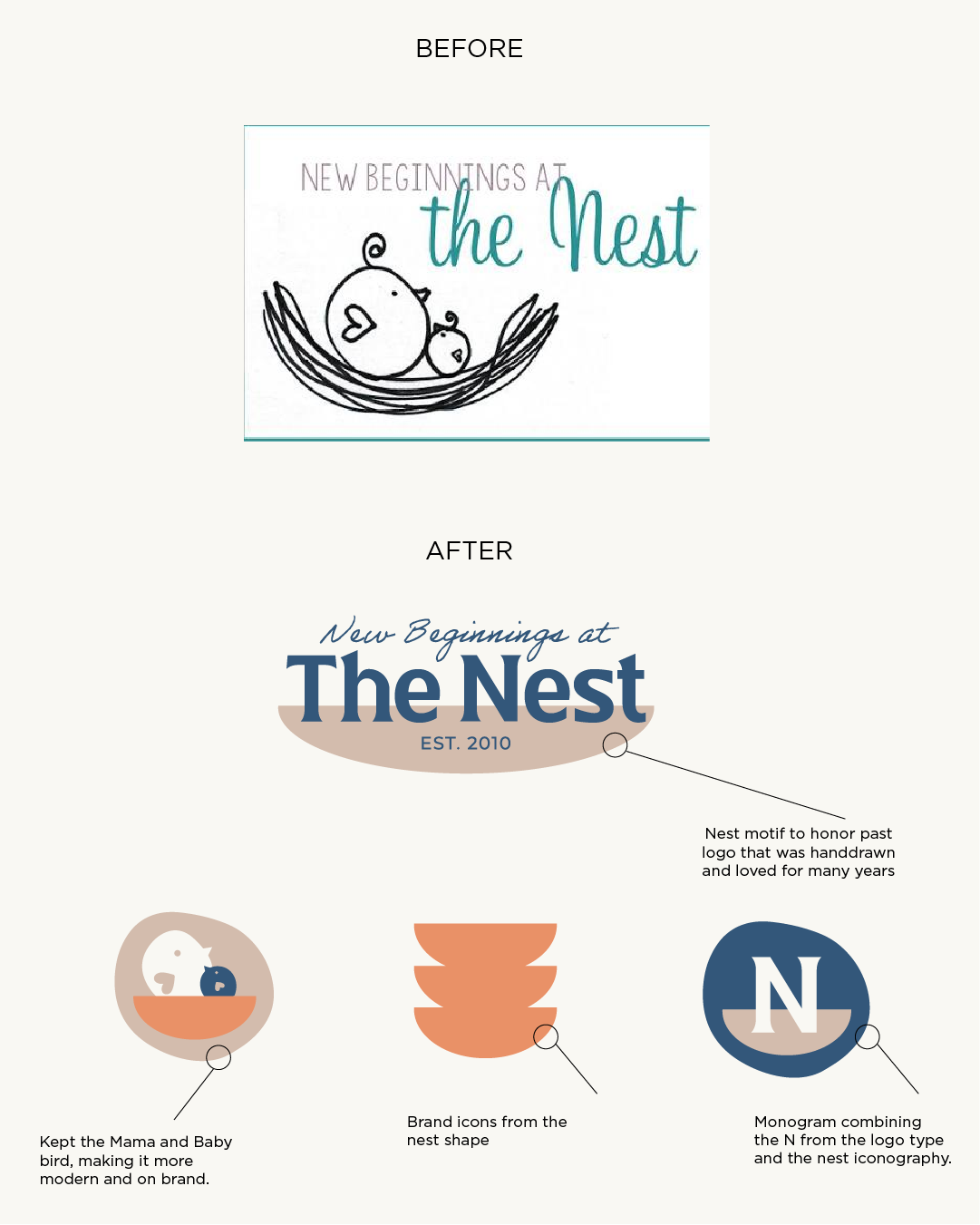
A brand refresh updates and refines your existing identity without completely changing its foundation.
This might include:
Refining your logo
Updating your color palette
Introducing new typography
Creating additional logo variations
Improving consistency across your marketing materials
Refreshing your website design
A refresh is often the right choice when your business positioning is still working, but your visual identity needs a little more polish.
Full Rebrand
A full rebrand takes a deeper look at your business and how it's positioned in the market.
It may involve:
Revisiting your ideal audience
Refining your brand positioning
Developing new messaging
Establishing a new creative direction
Designing a new visual identity
Updating your website and marketing materials
A full rebrand is typically a better fit when your business has significantly evolved or your existing brand no longer communicates who you are and what you offer.
The key difference: A brand refresh changes how your business looks. A full rebrand may change how your business is positioned, communicated, and experienced.
What Should You Consider Before Rebranding?
Before investing in a rebrand, it's worth asking a few important questions.
What isn't working with my current brand?
Be specific. Is it the visual identity, messaging, website, or the overall positioning of your business?
Who am I trying to attract?
Understanding your ideal audience helps guide design decisions that go beyond personal preference.
Where do I want my business to be in the next three to five years?
Your branding should support your future goals, not just your current situation.
What parts of my existing brand are worth keeping?
Rebranding doesn't always mean throwing everything away. If certain elements have strong recognition or sentimental value, they may be worth preserving.
Taking the time to answer these questions will help ensure your new brand is built with intention.
Why a Strategic Branding Process Matters
One of the biggest misconceptions about branding is that it's primarily about creating a beautiful logo.
While visual design is certainly important, successful branding starts with strategy.
At Studio Seaside, my branding process begins with understanding your business, your audience, and your goals.
From there, I develop a creative direction that brings those pieces together into a cohesive visual identity.
I also use a streamlined approach called the One Concept Method, which means I present one thoughtfully developed brand direction rather than overwhelming clients with several disconnected options.
The goal is to create a clear, intentional brand that supports your business and makes it easier to show up confidently.
Because great branding shouldn't just look beautiful. It should work for your business.
Frequently Asked Questions About Rebranding
How do I know if my business needs a rebrand?
If your branding no longer reflects your services, attracts the wrong audience, feels inconsistent, or doesn't support your current business goals, it may be time to consider a rebrand. Start by identifying what's no longer working before deciding how much needs to change.
How often should a business rebrand?
There's no set timeline. Some brands remain relevant for decades, while others need to evolve more frequently. Rather than rebranding every few years, evaluate whether your identity still supports your positioning, audience, and business goals.
Can I update my logo without completely rebranding?
Absolutely. If your overall brand strategy is still strong, a logo refinement or visual refresh may be enough. A full rebrand is usually more appropriate when your business positioning, audience, or services have changed significantly.
Is professional branding worth the investment?
Professional branding can help create a cohesive identity, communicate your value, and build trust with potential customers. The return depends on your business goals, how effectively the brand is implemented, and the experience you deliver.
Should I rebrand before redesigning my website?
If your branding no longer reflects your business, it's usually best to address your brand identity before starting a website redesign. Establishing your visual direction and messaging first creates