How to Create Project Proposals That Convert Like Crazy
After you’ve had a sales call with a potential client, it’s time to send them a stellar proposal to seal the deal. Proposals are a great way to position yourself as a creative expert, enabling you to charge more for your design projects.
Your proposal should aim to answer any questions the client may have and give them full confidence in what to expect and in your ability to deliver to their expectations.
What to Include in your Branding + Web Design Proposals
Client’s goals
After your discovery call you should have a really good idea of the goal that the client is hoping to achieve. They're not just hoping for a logo - they need a brand identity that will help their ideal clients connect with their business or attract customers that they actually want to be working with. Brand identity will elevate their brand so that they can become consistent, and with consistency comes credibility.
Think beyond just deliverables in this section. Consider the goals that you're helping your client achieve! This helps your client understand the value that you're bringing to the table and will make it easier for them to justify investing with you because you're providing them with a solution to their problem.
Project Scope
Next, you will want to outline what's included in the project. Rather than list a set of deliverables, talk about the goal that each deliverable will help the client achieve. For example, if they're going to have a 1:1 design consultation you can expand on that and let them know that in the consultation you'll be giving them guidance about their project. You'll listen to any of their ideas and strategize the project moving forward.
In this section, it’s also important to provide your client with options. Option one could include a pared down scope with some of their bare minimum needs. It will still help them achieve their goal but doesn't necessarily have all the bells and whistles. You also want to make sure that this option is priced so that you are still compensated for your time and expertise should they choose it.
Option two (and maybe even option three) can have expanded deliverables from option one. For example, if your client wants a brand identity for their new business, but it would also be nice to have packaging and additional collateral items, you can outline these extra items and give them an idea of what that would look like.
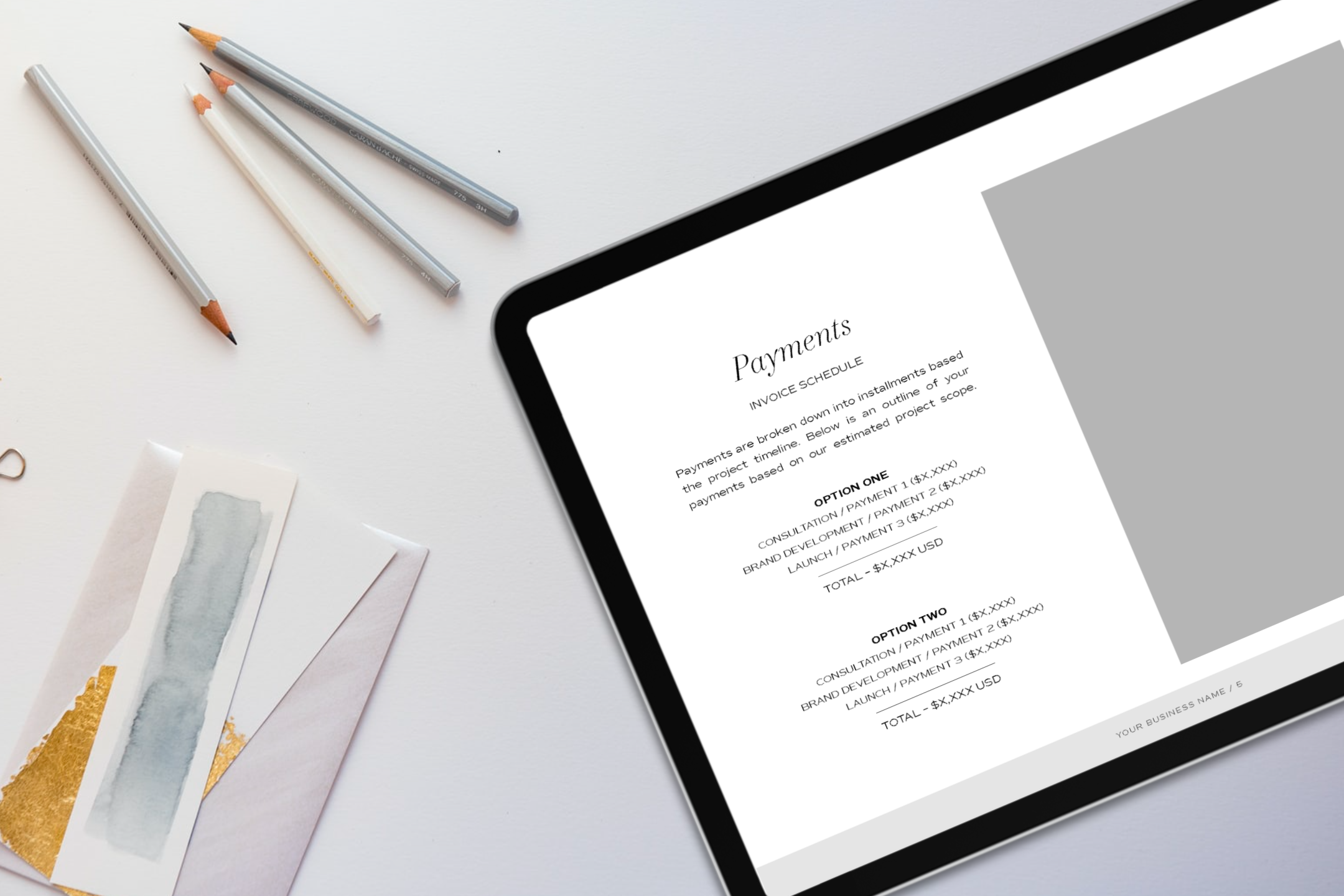
Payments
In this section you will outline your invoicing and schedule. I typically prefer to have payments due based on a date rather than deliverables. This ensures that you’re consistently getting paid, even if there are delays with the client providing feedback or materials.
If you have different options for each scope you offer, be sure to outline those details as well.
Additional Fees (if applicable)
This next section is optional based on the services that you’re offering. Occasionally there are additional fees that are not always included in the investment that the client is paying.
For example, if you’re a brand designer you might not always include fonts or stock images in the project fee. Or if you are a web designer, then the client is going to need to pay for web hosting and any third-party apps or plug-ins for the website.
It's important to outline those additional costs in the proposal so the client isn't surprised by them when they do come up.
Timeline
With any larger scope project you will need to outline your process for the clients. Typically there are deliverables that the client needs to provide, as well as deadlines for concepts or revisions that you will need to adhere to.
By outlining the timeline and your process in the project proposal the client has an understanding that they are a collaborator on the project and will need to be an active participant in order for the project to move forward smoothly.
I use the One Concept Method in my branding process, so I use this page as an opportunity to go over what that is, why I use it, and remind the clients that they're only going to be getting one concept during the project.
Working with us
Another important section to include is what your clients can expect when they work with you. This may vary depending on your industry or services that you're offering to your clients, but one thing I always include is revisions. I let the client know that they are only allowed three revisions within the scope, and any additional edits will be charged.
I also let them know that any written content needs to be provided before design can begin. If there are delays in the content, then there are going to be delays in the project as a whole. It’s important to be upfront about this in the project proposal so that there are no surprises down the line. It also helps you establish that your time is valuable and you can't just wait around for them to get you what you need.
Another important item that I highlight on this page is communication. I let the client know the best way that they can contact me, which is usually by email or Zoom, and for larger projects I will use a project management software like Asana or Trello. I do not give my clients my cell phone number. If you do the same, it’s important to let them know how they can get in touch with you so that they can respect those boundaries.

Next steps
Finally, you want to include a next steps section. This will let the client know what action they need to take after they read through the proposal and want to move forward.
I usually include the next steps in the email with the proposal, as well as in the proposal itself. For my clients, this involves letting me know they would like to get started and then I will send them the contract and an invoice for their deposit.
I also make sure to include my contact info on this page, as well as a thank you note for their time and consideration. It’s also really nice to include a smiling headshot of you and your team!
Sending the proposal
After your sales call, you’ll want to follow up within 24 hours, if not sooner. If you’re unable to get the proposal completed within 24 hours, send your client an email letting them know how nice it was to meet them and when they can expect your proposal.
While proposals are super important for establishing your expertise with potential clients, they’re only one component of your overall process.
If you want to learn how proposals fit into the client experience and deep dive into your branding process, my course Brand Process Savvy is designed to do just that!
You’ll get access to templates, swipe copy, and online videos to help you streamline your design process. You’ll also learn how to raise your rates for branding projects and reduce client revisions by learning the One Concept Method.
Click here to get on the waitlist!